
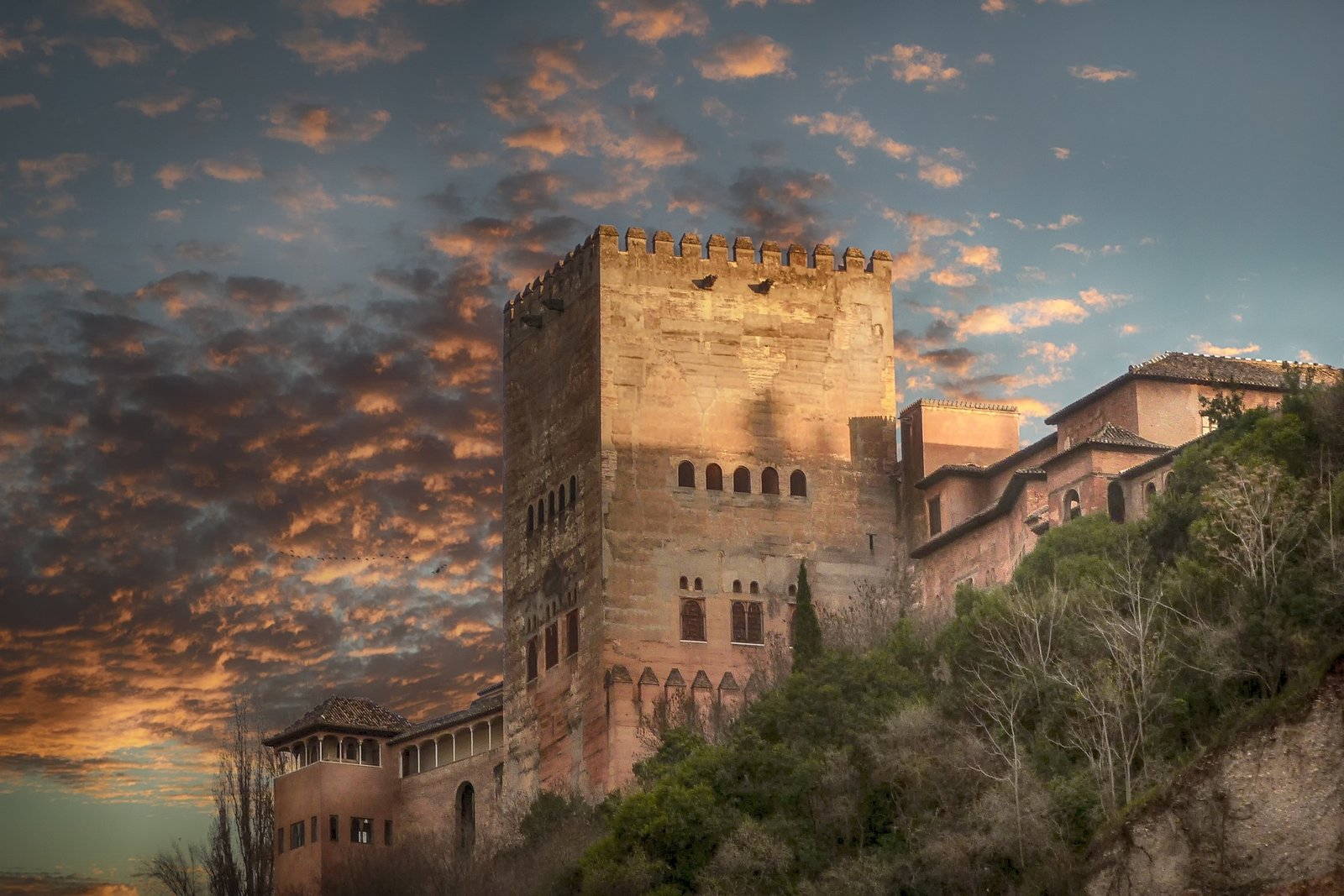
What is the best time of day to visit the Alhambra?
If you’re planning a visit to the Alhambra, you may soon wonder what the best time of day is to visit the Alhambra. It may sound like a detail, but at the Alhambra, the timing makes a surprisingly big difference.
It may sound like a detail, but at the Alhambra, the timing makes a surprisingly big difference. It affects how busy it feels, how pleasant the temperature is, how beautiful the light falls on the palaces and gardens, how relaxed you move through the complex, and even how successful your photos turn out. Moreover, the Alhambra works with time slots, especially for the Nasrid palaces, and the opening hours vary by season.
The short conclusion is that there is no one perfect time for everyone. The best time of day to visit the Alhambra depends on what you value most. If you prefer peace, cooler temperatures, and a fresh start, the morning is usually the best choice. If you prefer softer light, a calmer pace, and warmer colors for photography, the late afternoon or early evening may be more appealing. And if your ticket for the Nasrid palaces falls in the middle of the day, you should plan your visit around that instead of trying to schedule against the system. The good news is that the Alhambra is large enough to logically divide your visit, as long as you take your time slot seriously.
Why the timing at the Alhambra is so important
The Alhambra is not a monument you quickly walk through. It is an extensive complex with palaces, gardens, fortifications, paths, views, and transition spaces. This means that the timing of your visit directly affects your energy, your rhythm, and how much you really absorb of what you see. Therefore, the Alhambra operates differently than many other attractions, and it makes sense that you want to know in advance what the best time of day to visit the Alhambra is. Here, you are not only deciding when to arrive but also how you distribute your attention and energy.
In the early morning, you often look fresher and more focused. Later in the day, the colors may be warmer, and the atmosphere may feel softer. At the same time, you may also experience more fatigue or warmth. Especially in Granada, where temperatures can rise significantly in warmer months, this is not a theoretical point. It really affects how pleasant your visit is. For this reason, it is wise to not only look at your ticket in advance but also consider the time of day when you feel most comfortable moving and can enjoy the most.
Your timing also depends on the route and pace you choose, so it is useful to know how long a visit to the Alhambra takes before booking a slot.
The afternoon: not necessarily bad, but less comfortable
An afternoon visit is not automatically a bad choice, but it is usually less ideal if you are visiting the Alhambra for the first time. Especially in the warmer months, the middle of the day can feel heavier than you might expect. The grounds are large, you walk a lot, and you often want to stop to look or take photos. That all becomes less pleasant if you are already tired or if the heat slows you down.
However, the afternoon also has advantages. It can be convenient if your morning is already full, if you are arriving from another city, or if you could only get a ticket with a later Nasrid slot. In that case, the afternoon is not something to avoid but something to approach wisely. It is advisable to save your energy, eat on time, bring water, and consciously build your visit. With the right preparation, an afternoon visit can still be very successful.
If you are visiting during warmer months, also check the Alhambra dress code so your clothing matches the heat and walking distance.
Afternoon light and photography
For photography, the afternoon is often less flattering than the morning or late afternoon. The light can be harsher, with brighter contrasts and less soft shadows. At a monument like the Alhambra, where detail, relief, and atmosphere are so important, this makes a visual difference. Of course, you can still take beautiful photos in the middle of the day, but it usually requires a bit more patience and selection of viewpoints.
That doesn’t mean you should write off the afternoon. It just means that your expectations should be a bit more realistic. If your priority lies mainly with atmospheric images, warm colors, and softer light, then other times are often more appealing. If your priority mainly lies with ticket availability or practically fitting your day, then the afternoon can still work perfectly.
And what about evening or night visits?
Some visitors also think about an evening or night visit. This can be a special experience. Especially if you are looking for atmosphere, light, and a different perspective on the monument, this can be very appealing. However, it is good to realize that this is something different from the question of what the best time is for a complete first visit during the day. An evening or night visit usually offers a different experience than a regular daytime visit. If you are seeing the Alhambra for the first time and want to experience the entire complex well, a regular daytime visit is usually the more logical choice.
An evening visit can be particularly interesting as a supplement, or if you consciously choose experience over completeness. For a first, complete introduction, you usually want to have enough time, overview, and freedom of movement. And it is precisely in that regard that morning, late afternoon, or early evening within a normal daytime visit are often stronger. If that sounds like your kind of visit, read more about visiting the Alhambra by night.
So, what is really the best time of day?
For most people, the morning is the best time of day to visit the Alhambra. You usually benefit from cooler conditions, a fresher focus, a more pleasant pace, and less chance of feeling drained halfway through your visit. This is especially true in warmer months when the temperature can feel significantly heavier later in the day.
But that’s not the whole story. If you are mainly coming for photography, atmosphere, and calmer light, then the late afternoon or early evening may actually be the most beautiful choice. And if your ticket for the Nasrid palaces falls in the middle of the day, then that is essentially your anchor point. In that case, the best time is not necessarily morning or evening, but the time when your visit can be most logically built around that slot.
The smartest practical conclusion is as follows. Try to aim for a morning slot when booking if you want as much comfort and overview as possible. If you can’t get that, then build your visit around your Nasrid time slot in a relaxed manner and try not to cram everything into a too-tight schedule. The Alhambra does not reward haste. It is precisely when you give yourself enough time and peace that this place shines the most.
Are you still preparing your visit to the Alhambra? In our Alhambra Visitor Guide, you will find practical information about tickets, routes, opening hours and planning. For quick answers to common questions, you can also use our Alhambra FAQ.